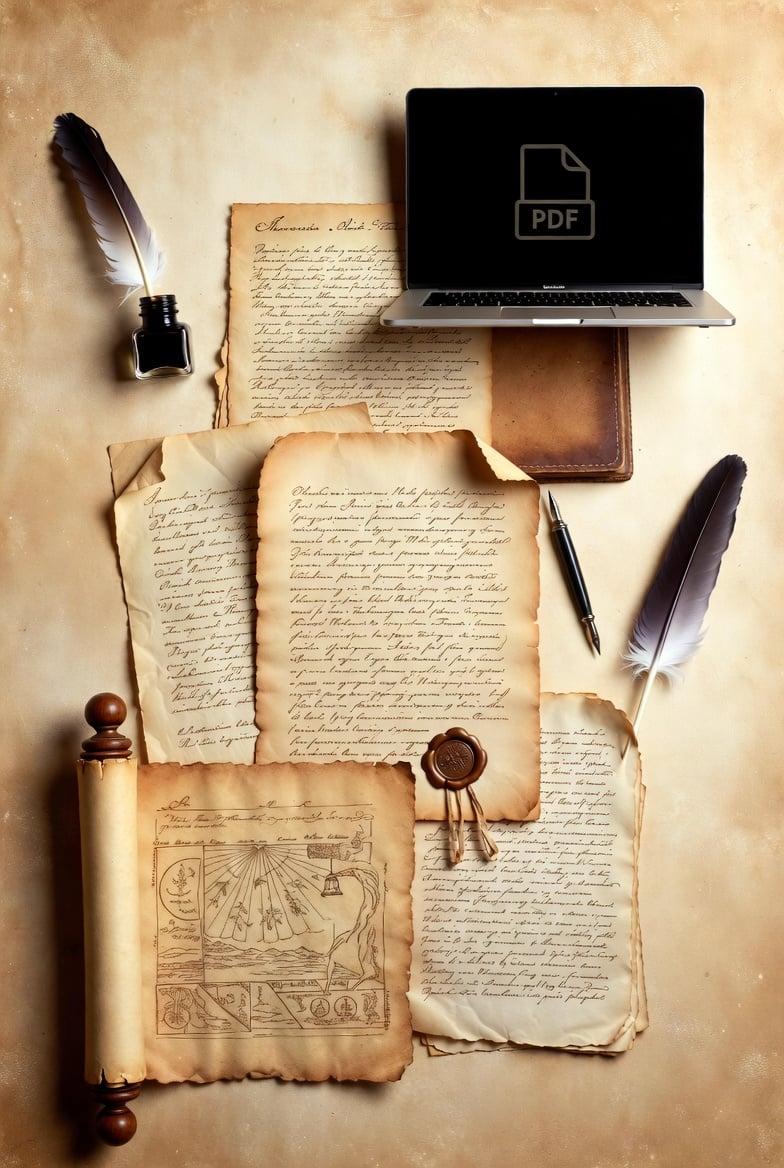
The History of PDF: From Camelot to Global Standard
Discover the fascinating journey of PDF from its inception in 1991 as the Camelot Project to becoming the world's most trusted document format.
Share this article
The History of PDF: From Camelot to Global Standard
Today, PDFs are everywhere. We use them for contracts, resumes, e-books, forms, and countless other documents. But have you ever wondered how this format came to be? The story of PDF is a tale of innovation, persistence, and strategic thinking that transformed how we share documents forever.
The Birth of an Idea: The Camelot Project
In 1991, Adobe co-founder John Warnock had a vision. He saw a problem that plagued the digital world: documents created on one computer looked completely different—or sometimes didn't work at all—on another. Fonts would change, layouts would break, and formatting would disappear.
Warnock initiated what he called the "Camelot Project," named after the legendary kingdom of King Arthur. The goal was ambitious: create a universal file format that would preserve the exact appearance of documents, regardless of the hardware or software being used. It would be like printing a document, but in digital form—what you see is what you get, every single time.
This wasn't just about convenience. It was about solving a fundamental challenge in computing: how to share information reliably across different systems when everyone was using different software, different fonts, and different printers.
The Official Launch: June 15, 1993
After two years of development, Adobe officially launched PDF and the first version of Adobe Acrobat on June 15, 1993. The initial Acrobat suite included three key components:
- Acrobat Exchange – For creating and viewing PDFs
- Acrobat Reader – A free viewer for reading PDF files
- Acrobat Distiller – A tool for converting PostScript files into PDF format
The launch was a significant moment, but it wasn't an instant success. The technology was revolutionary, but adoption was slow. Why? Several factors worked against PDF in those early days.
Early Challenges: Cost, Size, and Speed
The 1990s were a different era of computing. Internet speeds were measured in kilobytes per second, not megabytes. Hard drives were measured in megabytes, not terabytes. Against this backdrop, PDF faced three major hurdles:
- Cost barriers – Initially, even Acrobat Reader wasn't free, which limited its adoption
- Large file sizes – Early PDFs were bulky, making them difficult to transmit over the slow internet connections of the time
- Limited bandwidth – Most people were using dial-up modems, and downloading a large PDF could take hours
These challenges meant that PDF adoption was primarily limited to professional desktop publishing environments where the benefits outweighed the costs and technical limitations.
The Game-Changer: Free Acrobat Reader
In 1994, Adobe made a strategic decision that would change everything: they made Acrobat Reader completely free. This move was revolutionary. By removing the cost barrier, Adobe opened the floodgates for PDF adoption.
Suddenly, anyone could view PDF files without paying a dime. This democratization of the format led to explosive growth, especially in industries that relied heavily on document exchange:
- Legal firms could share contracts and briefs reliably
- Government agencies could distribute forms and regulations
- Publishers could create digital versions of books and magazines
- Businesses could share reports and presentations with confidence
The free Reader became the foundation that made PDF a universal standard. It was a classic example of giving away the viewer to create demand for the creator tools.
Evolution Through the 1990s: Building the Foundation
Throughout the 1990s, Adobe continuously enhanced PDF, adding features that made it more powerful and versatile:
PDF 1.1 (1994)
The first major update introduced critical security and color features:
- Password protection – Documents could now be secured with passwords
- Encryption – Files could be encrypted to protect sensitive information
- Device-independent color – Colors would look consistent across different displays and printers
PDF 1.2 (1996)
This version transformed PDF from a static format into an interactive one:
- Interactive forms – PDFs could now include fillable form fields
- Annotations – Users could add comments, highlights, and notes
- JavaScript actions – Documents could include interactive elements and automation
PDF 1.3 (1999)
By the end of the decade, PDF had become a comprehensive document solution:
- Digital signatures – Documents could be electronically signed and verified
- Improved color spaces – Better support for professional color printing
- Embedded file streams – PDFs could contain other files within them
Each version built upon the last, making PDF more capable and more indispensable.
Becoming the De Facto Standard
By the end of the 1990s, PDF had achieved something remarkable: it had become the de facto standard for electronic document distribution. What started as an ambitious project to solve cross-platform document sharing had evolved into something much bigger.
PDF succeeded where other formats failed because it solved a real problem in a way that was both technically sound and strategically accessible. The combination of:
- Universal compatibility across platforms
- Free viewing software
- Consistent visual appearance
- Security features
- Interactive capabilities
...made PDF the obvious choice for anyone who needed to share documents reliably.
The Legacy: Why PDF Still Matters Today
More than three decades after the Camelot Project began, PDF remains the most trusted format for document exchange. It's used by billions of people worldwide for everything from tax forms to academic papers, from legal contracts to digital books.
The format's success can be traced back to those early decisions: solving a real problem, making the viewer free, and continuously improving the technology. Today, tools like PDFMagical build on this foundation, making it easier than ever to work with PDFs—merging, splitting, compressing, editing, and converting them to meet our modern needs.
The story of PDF is a reminder that great technology isn't just about innovation—it's about solving real problems and making solutions accessible to everyone. From Camelot to your computer, PDF has come a long way, and it's not going anywhere anytime soon.
Try These Tools
Related Articles
How to Merge PDF Files Online: A Complete Guide
Learn how to combine multiple PDF documents into a single file using free online tools. Step-by-step guide with tips and best practices.
Read more
How to Compress PDF Files and Reduce File Size
Discover effective methods to compress PDF files and reduce their size without losing quality. Learn about different compression levels and when to use them.
Read more
PDF vs Word: When to Use Each Format
Understand the differences between PDF and Word formats, and learn when to use each for maximum efficiency in your document workflow.
Read moreComments (0)
No comments yet. Be the first to comment!
Note: Some comments are pre-loaded examples. Your comments are stored locally in your browser and won't be visible to other users.